Rediscover Play: Let Your Child’s Curiosity Inspire You


Rediscover Play: Let Your Child’s Curiosity Inspire You
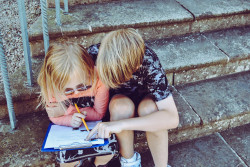
When children play, they see the world with open eyes. A stick becomes a magic wand, a cardboard box turns into a rocket ship, and a puddle transforms into an ocean. To adults, it might look like imagination—but for children, it’s their way of exploring, understanding, and making sense of the world. And maybe that’s where we, as adults, can learn something. What happens when we rediscover play—not as a task, but as a source of curiosity, joy, and connection?
Play as a Window into Your Child’s World
When you play with your child, you step into their universe. You get a rare glimpse of how they think, feel, and interpret what’s around them. Play isn’t just entertainment—it’s communication. It reveals what captures your child’s attention and how they process their experiences.
Notice what your child returns to in play. Do they love pretending to be in charge? Building things from blocks or Legos? Creating wild stories where anything is possible? Each type of play offers clues about their thoughts and needs—and by joining in, you show that their world matters to you.
Let Go of Control—and Follow Their Lead
As adults, we’re used to planning, organizing, and staying in control. But play follows different rules. In play, the child leads—and that can be both challenging and freeing. When you let your child take the lead, you show trust. You signal that their ideas are valuable and that you’re willing to follow along, even when the game takes unexpected turns.
It can be refreshing to surrender to the moment, without worrying whether it “makes sense.” In your child’s world, it always does. And in that space of imagination, you might rediscover your own sense of wonder.
Læs også:




Curiosity Is Contagious
Children are natural question-askers: “Why is the sky blue?” “How do birds know where to fly?” “Can we live on the moon?” Their curiosity is endless—and it can remind us how much there still is to discover.
Instead of rushing to give answers, try exploring the questions together. Look things up, do a small experiment, or step outside to see for yourselves. When you show that you’re curious too, your child learns that not knowing is okay—and that learning is a lifelong adventure.
Play as an Antidote to Everyday Busyness
Between work, school, errands, and screens, play can easily get pushed aside. But that’s exactly why it’s so important. Play creates pauses—moments where time slows down and connection takes center stage.
It doesn’t have to be elaborate. Build a blanket fort in the living room, bake cookies together, or take a spontaneous walk in the rain. It’s not about the outcome—it’s about the experience. About being present together, without goals or expectations.
Bringing Play into Your Own Life
Rediscovering play isn’t only about playing with your child. It’s also about making space for play in your own life. Doing something just for fun—without purpose or performance. Maybe it’s painting, dancing, gardening, playing music, or simply daydreaming.
When you allow yourself to play, you nurture creativity, flexibility, and emotional well-being. You reconnect with the part of you that once saw the world with childlike wonder—and that part still has a lot to teach you.
An Invitation to See the World Anew
Letting your child’s curiosity inspire you is an invitation to see the world differently. To notice the extraordinary in the ordinary, and to find joy in the unexpected. Play reminds us that life isn’t only about reaching the destination—it’s about being part of the journey.
So next time your child asks you to build a pillow castle or invent a story about a talking cat—say yes. Not because you have to, but because you can. In play, two worlds meet—and both become richer for it.
Læs også: